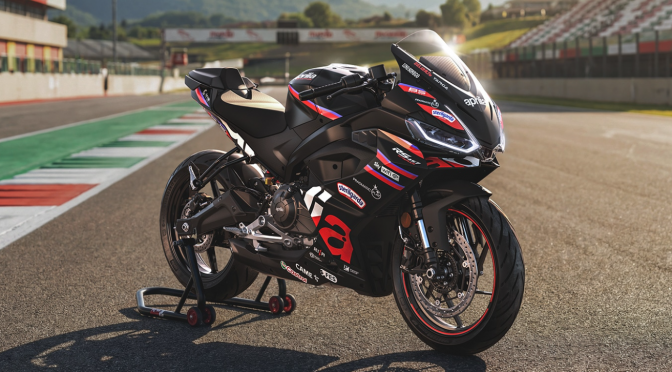
The Aprilia RS 457 brings serious sportbike engineering to a class often defined by affordability and simplicity. Its 457cc parallel-twin engine, aluminum frame, and electronic rider aids reflect the design priorities of Aprilia’s larger performance motorcycles. Yet the RS 457 delivers these features without the intimidating power or demanding ergonomics of a traditional supersport.
Producing approximately 47 horsepower, the motorcycle offers enough acceleration for highway travel, winding roads, and occasional track days. Its relatively low weight and approachable riding position also make it appealing to riders developing their sportbike skills.
This Aprilia RS 457 review examines the engine, handling, braking, electronics, and everyday usability. It also explores where the motorcycle stands against the more powerful RS 660.
What Makes the Aprilia RS 457 a Sportbike?
The RS 457 bridges the gap between commuter-oriented motorcycles and more demanding middleweight sportbikes. Its aluminum twin-spar frame, radially mounted front brake caliper, and ride-by-wire throttle are features associated with larger performance machines.
Styling takes inspiration from the RS 660 and RSV4. Angular fairings, distinctive LED lighting, and a compact windscreen create a recognizable Aprilia silhouette. The bodywork provides wind protection, while the sculpted fuel tank gives riders secure contact points during braking and cornering.
The Aprilia RS 457 riding position is sporty without forcing an extreme racing crouch. Clip-on handlebars mounted above the upper triple clamp reduce forward lean, making the motorcycle more accommodating during ordinary road use.
European A2 licensing requirements also influenced its development. Rather than restricting a substantially more powerful engine, Aprilia designed the 457cc twin to produce 35 kW in standard form, matching the category’s maximum permitted output.
Engine Performance and Technical Specifications
The Aprilia RS 457 engine is a liquid-cooled, 457cc parallel twin with dual overhead camshafts and eight valves. It produces 35 kW at 9,400 rpm and 43.5 Nm of torque at 6,700 rpm.
Power reaches the rear wheel through a six-speed gearbox and wet multiplate slipper clutch. During aggressive downshifts, the slipper mechanism helps limit rear-wheel hopping caused by excessive engine braking. Smooth clutch operation and appropriate gear selection remain important.
The engine has a 69 mm bore and 61.1 mm stroke, giving it an oversquare configuration suited to relatively high engine speeds. Intake design, valve timing, and electronic mapping also influence its usable power delivery.
The following Aprilia RS 457 specs describe the standard motorcycle.
| Specification | Aprilia RS 457 |
| Engine | 457cc liquid-cooled parallel twin |
| Maximum power | 35 kW (approximately 47 hp) at 9,400 rpm |
| Maximum torque | 43.5 Nm (32.1 lb-ft) at 6,700 rpm |
| Transmission | 6-speed |
| Clutch | Wet multiplate with slipper function |
| Frame | Aluminum twin-spar |
| Front suspension | 41 mm inverted fork, preload adjustable |
| Rear suspension | Monoshock, preload adjustable |
| Front brake | 320 mm disc, four-piston radial caliper |
| Rear brake | 220 mm disc, single-piston caliper |
| Seat height | 800 mm (31.5 inches) |
| Ready-to-ride weight | 175 kg (386 lb) |
| Fuel capacity | 13 liters (3.4 US gallons) |
Aprilia lists a ready-to-ride weight of 175 kg with operating fluids and fuel at approximately 90% of tank capacity. This is a more useful reference for everyday handling than the manufacturer’s 159 kg dry-weight figure.
Aprilia RS 457 Horsepower and Acceleration
The Aprilia RS 457 horsepower rating reaches the European A2 power ceiling. Peak torque arrives well before maximum power, providing useful midrange pull before acceleration builds toward the upper rev range.
The parallel twin delivers relatively smooth, predictable power. Riders can accelerate comfortably at moderate engine speeds, although overtaking and faster corner exits benefit from deliberate gear selection.
According to Aprilia’s published performance information, the Aprilia RS 457 top speed approaches 190 km/h (118 mph). This is a manufacturer-reported figure rather than a guaranteed result under all conditions. Wind, rider position, road gradient, and measurement methods influence actual speed.
The Aprilia RS 457 performance is sufficient for sustained highway travel, but acceleration at higher speeds is less immediate than on a more powerful middleweight motorcycle.
Aprilia RS 457 Weight and Power-to-Weight Ratio
At 175 kg ready to ride, the motorcycle remains relatively manageable for a fully faired twin-cylinder sportbike.
Dividing its 35 kW output by the published weight produces approximately 200 kW per metric ton. The calculation excludes the rider, luggage, and accessories, which increase total operating weight.
Power-to-weight ratio helps explain the RS 457’s acceleration potential, although gearing, torque delivery, aerodynamic resistance, and traction also affect real-world performance.
Riding Experience and Handling
The Aprilia RS 457 handling characteristics reflect its compact chassis, aluminum frame, and conventional sportbike wheel dimensions.
Both wheels measure 17 inches in diameter, with a 3-inch front rim and a 4.5-inch rear rim. This arrangement accommodates sport-oriented tires without requiring the wider rear rubber used on more powerful motorcycles.
The relatively low weight reduces the physical effort needed for direction changes. Steering response still depends on tire profile, pressure, suspension setup, and rider inputs.
The motorcycle’s chassis geometry is intended to balance responsiveness with stability, making it suitable for winding roads and controlled track riding.
Cornering and Stability
The aluminum twin-spar frame connects the steering head to the swingarm area, with the engine contributing to the structure. This arrangement helps control chassis weight while maintaining the rigidity required for precise steering.
Progressive braking before a corner allows the suspension to settle as the rider establishes the intended line. Abrupt steering movements can still disturb the motorcycle, particularly when braking or accelerating near the available traction limit.
The fuel tank and footpeg placement help riders support their weight through their legs instead of placing excessive pressure on the handlebars.
On a racetrack, the RS 457 rewards consistent braking points, accurate corner entry, and smooth exits. Its moderate engine output makes preserving momentum especially valuable.
Braking and Suspension Response
The Aprilia RS 457 brakes use a single 320 mm floating front disc with a radially mounted four-piston ByBre caliper. A 220 mm rear disc works with a single-piston caliper.
A single front disc reduces hardware weight compared with many dual-disc arrangements, although repeated high-energy braking concentrates heat in one rotor and caliper. Braided brake hoses help maintain consistent hydraulic response.
The Aprilia RS 457 suspension consists of a 41 mm inverted front fork with 120 mm of travel and a rear monoshock providing 130 mm of wheel travel.
Both ends offer spring-preload adjustment. Riders can use it to set suspension sag within the limits of the installed springs, but preload does not alter spring rate or damping characteristics.
The standard suspension lacks separate compression and rebound damping adjustments. Its specification suits general road riding and occasional track use, although frequent track riders may eventually prefer more extensive tuning options.
Design Inspired by Aprilia Racing Motorcycles
The RS 457 shares its visual identity with Aprilia’s larger sportbikes while retaining proportions appropriate to its smaller engine and chassis.
Sharp fairings, layered side panels, a compact tail, and integrated LED lighting create a distinctive RS silhouette. The relatively narrow frontal profile also emphasizes the motorcycle’s lightweight character.
The aerodynamic bodywork provides more wind protection than a naked motorcycle, particularly when the rider leans forward behind the screen. Nevertheless, the compact windscreen leaves some airflow around the helmet and shoulders during highway travel.
Fully enclosed bodywork introduces practical compromises. Replacement fairings can be expensive after a fall, and some maintenance operations require removing panels to reach mechanical components.
Electronics and Rider Assistance Features
The Aprilia RS 457 features electronic controls that were once uncommon in lightweight sportbikes.
Its ride-by-wire throttle allows the engine management system to interpret rider inputs electronically. Three selectable riding modes modify throttle response, while adjustable traction control helps manage excessive rear-wheel slip.
A 5-inch full-color TFT dashboard displays essential riding information. Backlit handlebar switches make the controls easier to identify in low-light conditions.
Standard equipment includes:
- Three riding modes with different throttle-response characteristics.
- Adjustable Aprilia Traction Control (ATC), which can also be disabled.
- Dual-channel ABS with selectable settings, including rear-wheel ABS deactivation where supported by the applicable specification.
- Aprilia Engine Maps (AEM) for electronic throttle management.
- A 5-inch color TFT instrument display.
Unlike the RS 660, the standard RS 457 does not use a six-axis inertial measurement unit. Its traction-control and braking systems therefore lack the same lean-sensitive intervention capabilities found on more advanced motorcycles.
ABS and traction control provide useful assistance, but neither can overcome the physical limits of tire grip.
An electronic quickshifter is available as an accessory on standard versions. Equipment and electronic settings may vary between model years, markets, and special editions.
Is the Aprilia RS 457 Suitable for Beginners?
The RS 457 can be a suitable beginner sportbike for riders who have completed formal rider training and want a motorcycle with room for skill development.
Its 800 mm seat height is approachable for many riders, although inseam length and seat width determine how securely someone can reach the ground. The relatively moderate forward lean also provides an introduction to sportbike ergonomics without the extreme posture of a race-focused supersport.
Engine response is more manageable than on a high-performance middleweight, while ABS, traction control, and the slipper clutch provide additional support in certain situations.
Still, the RS 457 offers brisk acceleration and speeds well beyond highway limits. Its accessible performance should not be mistaken for an absence of risk.
Insurance premiums, replacement fairings, maintenance costs, and dealer availability also deserve consideration when choosing it as a first motorcycle.
Aprilia RS 457 vs RS 660
The Aprilia RS 457 vs RS 660 comparison highlights the distinction between an accessible lightweight sportbike and a more powerful middleweight performance machine.
Differences in Power and Performance
The RS 457 develops approximately 47 hp from its 457cc parallel twin. The updated full-power 2025 RS 660 produces 105 hp and 70 Nm of torque from its 659cc engine.
That difference becomes especially noticeable during high-speed overtaking and acceleration out of corners. The RS 660 has substantially greater power reserves, while the RS 457 encourages careful gear selection and momentum conservation.
The larger motorcycle also offers an IMU-supported Aprilia Performance Ride Control system, cornering ABS, cruise control, and additional riding modes.
| Feature | RS 457 | RS 660 (2025 full-power) |
| Displacement | 457cc | 659cc |
| Maximum power | Approximately 47 hp | 105 hp |
| Maximum torque | 43.5 Nm | 70 Nm |
| Riding character | Lightweight sport riding | Higher-performance road and track riding |
| Electronics | ABS, traction control, 3 modes | IMU-based APRC, cornering ABS, 5 modes |
| Primary audience | Developing sportbike riders | Riders seeking greater performance |
Riding Experience and Intended Use
The RS 457 suits city riding, winding roads, and occasional track days. Its compact dimensions make maneuvering relatively easy, while its engine rewards accurate gear selection and smooth corner exits.
The RS 660 is better suited to riders seeking stronger acceleration, more sophisticated electronic assistance, and greater performance during demanding track sessions. Those capabilities come with higher purchase and running costs.
For everyday sport riding, the decision depends on how much performance the rider actually needs. The RS 457 has enough power for commuting, highway travel, and weekend backroads without the extra output of the larger model.
Ownership Considerations and Everyday Practicality
The RS 457 is more accommodating than its aggressive appearance suggests, but it retains several compromises typical of fully faired sportbikes.
Its forward-leaning riding position may become tiring during long journeys or extended periods in stop-and-go traffic. Riders with limited flexibility may notice discomfort sooner.
The 13-liter fuel tank is reasonable for the motorcycle’s size. Actual range depends on fuel consumption, cruising speed, traffic, and throttle use. Sustained high-speed riding increases aerodynamic resistance and generally raises fuel demand.
Passenger accommodation is limited, and the compact tail offers little luggage space without additional equipment. Riders planning longer trips may need a tank bag or motorcycle-specific tail bag.
Maintenance costs vary by region. Dealer access, parts availability, insurance classifications, and service labor rates all influence long-term ownership expenses.
Final Assessment of the Aprilia RS 457
The Aprilia RS 457 combines a responsive parallel-twin engine, aluminum chassis, capable braking hardware, and adjustable electronic assistance in a compact sportbike.
Its strongest qualities are the balance between performance and manageability, accessible ergonomics, and chassis equipment associated with larger performance motorcycles. It provides enough capability for spirited road riding and occasional track use without the demands of a full-size supersport.
There are limitations. Suspension adjustment is basic, high-speed acceleration cannot match larger motorcycles, and the fully faired design introduces some everyday inconvenience.
For riders entering the sportbike category, the RS 457 offers a useful combination of technical sophistication and manageable performance. Experienced motorcyclists may also appreciate a lightweight machine that rewards accurate braking, steering, and gear selection rather than relying on outright engine power.
FAQ
How fast is the Aprilia RS 457?
Aprilia reports a top speed approaching 190 km/h (118 mph). Actual speed varies with rider position, wind, road conditions, and measurement methods.
How much horsepower does the Aprilia RS 457 produce?
The 457cc parallel-twin engine produces 35 kW, approximately 47 mechanical horsepower, at 9,400 rpm. This matches the European A2 motorcycle power limit.
Is the Aprilia RS 457 good for beginners?
Yes, for properly trained riders comfortable with its performance and sport-oriented ergonomics. ABS, traction control, and predictable throttle response make it a reasonable option for developing motorcyclists.
Does the Aprilia RS 457 have adjustable suspension?
Both the front fork and rear shock offer spring-preload adjustment. The standard suspension does not provide separate compression or rebound damping controls.
What is the difference between the Aprilia RS 457 and RS 660?
The RS 660 has a larger engine, considerably more power, and more advanced electronic rider aids. The RS 457 emphasizes lower weight, manageable performance, and accessibility for riders entering the sportbike category.